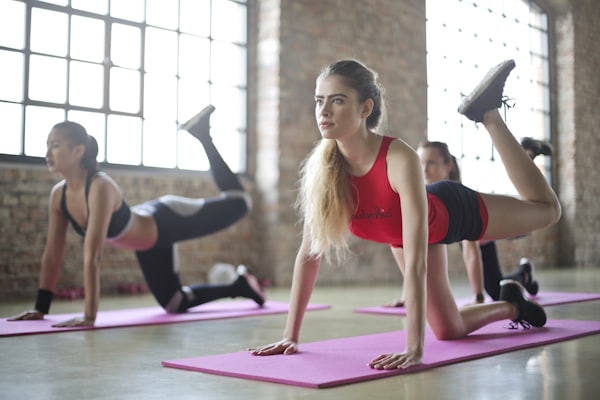
Beginner Bodyweight Circuit
A full-body routine that requires no equipment. Suitable for those new to structured training or returning after a break. Focus on controlled movement and proper form over speed.
Routine (3 rounds, 60 s rest between rounds)
- Bodyweight squats — 12 reps. Stand with feet shoulder-width apart, lower hips until thighs are parallel to the floor, then drive back up.
- Push-ups (standard or knee) — 8–10 reps. Maintain a straight line from head to knees or toes. Lower chest to the floor, press back up.
- Glute bridges — 12 reps. Lie on your back, feet flat on the floor, drive hips upward by squeezing glutes at the top.
- Plank hold — 20–30 seconds. Forearms on the floor, body in a straight line. Avoid letting hips sag or pike upward.
- Standing calf raises — 15 reps. Rise onto the balls of your feet, pause briefly, lower slowly.
Notes: Perform this circuit 2–3 times per week with at least one rest day between sessions. Progression can be achieved by increasing repetitions or adding a fourth round.
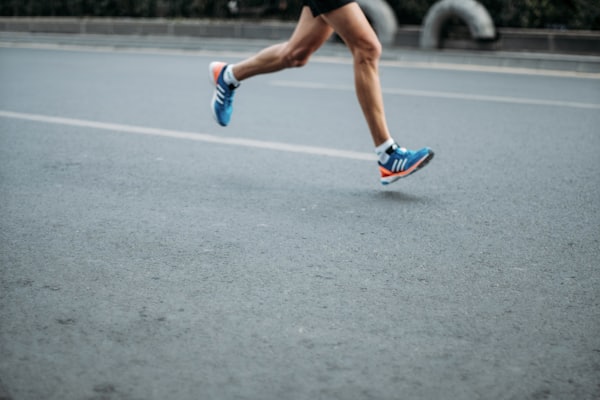
Cardiovascular Endurance: Interval Walking & Running
A progressive approach to building aerobic fitness. This protocol alternates between walking and running intervals, allowing your cardiovascular system to adapt gradually.
Week 1–2 Protocol (30 minutes total)
- 5-minute warm-up walk at a comfortable pace
- Alternate: 1 minute light jog / 2 minutes brisk walk — repeat 7 times
- 4-minute cool-down walk
Week 3–4 Progression
- 5-minute warm-up walk
- Alternate: 2 minutes jog / 1 minute walk — repeat 7 times
- 4-minute cool-down walk
Notes: Perceived effort during jogging intervals should be moderate — you should be able to hold a brief conversation. If you experience joint pain or unusual discomfort, reduce intensity or consult a healthcare professional. Hydrate before and after the session, particularly in warmer Australian climates.
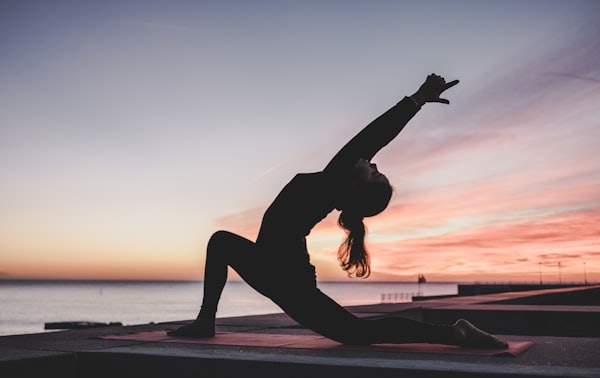
Mobility & Flexibility Session
A 15-minute routine focused on improving joint range of motion and muscular flexibility. Regular mobility work may support recovery and reduce the risk of movement-related discomfort during training.
Sequence (hold each position for 30–45 seconds)
- Cat-cow stretch — On hands and knees, alternate between arching and rounding the spine.
- World's greatest stretch — Lunge position with rotation: place one hand on the floor and rotate the opposite arm toward the ceiling.
- Hip flexor stretch — Half-kneeling position, gently shift weight forward until you feel a stretch at the front of the rear hip.
- Thoracic spine rotation — Side-lying, top knee bent and anchored, rotate upper body and reach opposite arm behind you.
- Standing hamstring stretch — Place heel on a low surface, keep leg straight, hinge forward from the hips.
- Child's pose — Knees wide, arms extended forward, rest forehead on the floor. Breathe slowly and deeply.
Notes: This routine can be performed daily or as a warm-up/cool-down alongside other training. Avoid bouncing or forcing positions beyond a comfortable stretch.